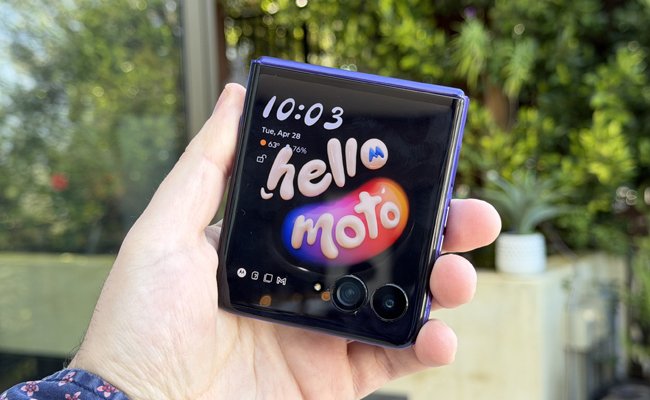
Motorola has become one of the first brands to bring silicon-carbon battery technology to mainstream smartphones. While traditional smartphones use lithium-ion batteries, Motorola’s new Razr Ultra 2026 switches to silicon-carbon cells, which offer a key advantage of higher energy density. This means more battery capacity in the same or even smaller physical size.
The energy density is the primary benefit of silicon-carbon. The dynamics of phone design for foldable models makes the compactness that silicon-carbon can manage especially useful. Hence, for foldable phones, where space is limited, this is a game-changing upgrade. With this new technology, Motorola has managed to increase battery capacity to 5,000mAh, instead of the 4,700mAh battery found in last year’s model. The dimensions of the new phone, however, are no bigger than the 2025 version.
“Thanks to revolutionary silicon-carbon technology, users get the benefit of long-lasting battery life without a thicker phone, maintaining the Razr family’s thin and pocketable design without compromise,” Motorola said in a press release.
This also indicates that the company has effectively beaten Apple, Google and Samsung to the new kind of cell in the States. The ground-breaking technology isn’t restricted only to the Ultra model.
Alongside the Ultra, Motorola has also introduced silicon-carbon to another model in the range, the Razr Fold, which is the model which unfolds from regular phone size to a smallish, squarish tablet.