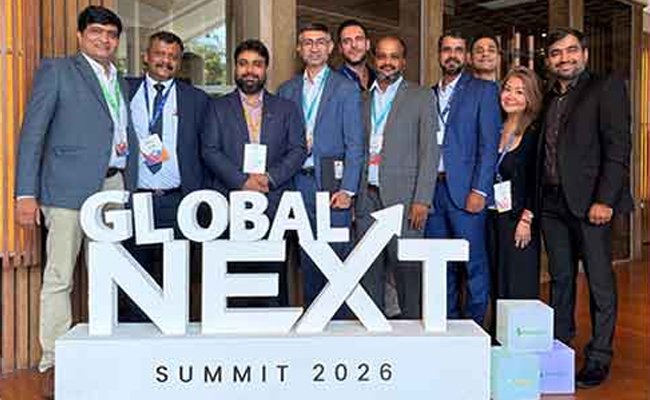
Artificial intelligence has moved from an experimentation race into a far more complex phase. The question is no longer simply who has the most powerful AI model, but who can economically, securely and reliably orchestrate AI across the enterprise said Steve Brazier, Co-Founder-Canapii
AI demand itself may not be a bubble, but the economics are changing quickly. Enterprises that initially focused on maximizing AI usage are now confronting the cost of tokens and asking harder questions about ROI, model selection and workload efficiency. “Tokenomics” is emerging as an important consideration as organizations determine which model delivers the right combination of intelligence, speed and cost for each task.
At the same time, the structure of the AI industry is becoming increasingly complicated. Hyperscalers, semiconductor companies, closed-model providers, open-weight models and emerging AI clouds are competing for control of different layers of the technology stack. Open-weight models are particularly important because enterprises can potentially deploy them on their own infrastructure, reducing external data transfers and creating alternatives to dependence on proprietary platforms.
The scale of investment is extraordinary. The presentation estimates around $800 billion in AI infrastructure spending this year, demonstrating how strategically important compute, chips, data centres and supporting infrastructure have become.
Steve Brazier further says, Yet the channel has not benefited equally from this AI boom. While semiconductor, memory, vendor and distributor businesses have experienced strong growth, the presentation argues that partners have so far captured considerably less value. Hardware, however, remains fundamental: every AI model ultimately depends on computing infrastructure, while shortages, memory pricing, energy requirements and rapidly changing configurations are creating new complexity for customers.
AI Must Become a Core Enterprise Competence
The bigger strategic shift is that enterprises cannot treat AI like another IT system that can simply be outsourced. AI is becoming deeply connected to how organizations operate, compete and create future value. Therefore, leadership must own the AI strategy while developing internal understanding of how intelligence should be applied across the business.
This does not eliminate opportunities for technology partners—it changes where the opportunity lies.
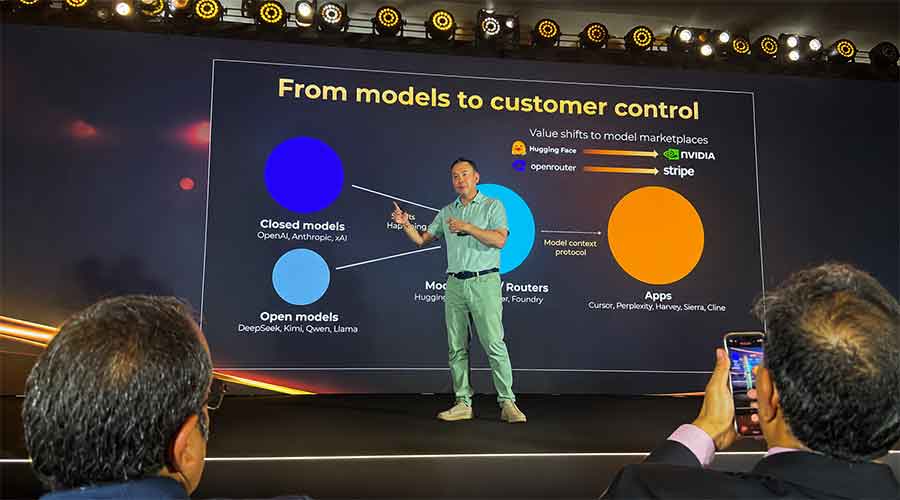
Enterprises will increasingly operate multiple models because different workloads require different levels of intelligence, latency, security and cost. A simple enterprise query does not require the same frontier model needed for highly complex scientific analysis. Organizations therefore need an intelligent layer capable of routing workloads to the appropriate model.
That creates a potentially massive opportunity for the channel: becoming the AI infrastructure and orchestration layer for customers.
Steve emphasized on how Partners can help enterprises determine where data resides, who can access it, which information can be sent to external models, what must be anonymized, and which sensitive workloads should remain private. This becomes particularly important in regulated industries such as banking, finance and healthcare.
They can also help organizations manage model costs, performance, resilience, portability, infrastructure choices and data retention. Enterprises may even reconsider on-premise or sovereign infrastructure where greater control over sensitive information is required.
The AI revolution therefore creates a new channel opportunity beyond simply selling AI products. The next-generation technology partner will orchestrate models, infrastructure, data, privacy, security, cost and resilience—turning an increasingly fragmented AI ecosystem into a trusted enterprise architecture.
In this new market, the greatest value may not belong to whoever owns the “best” AI model. It may belong to those who can connect, govern and orchestrate the right intelligence for the right workload, securely and economically at scale.