
With the DPDP Rules finally notified in November 2025, India's data privacy market moved from anticipation to obligation — and enterprises have 18 months to get ready or face penalties that can reach Rs 500 crore
For years, India's data privacy story was essentially a story about waiting. The Digital Personal Data Protection Act was passed in August 2023, debated, amended, consulted upon, and then left to mature while enterprises hedged their compliance investments and vendors positioned their platforms. That wait ended on 14 November 2025, when the Ministry of Electronics and Information Technology notified the DPDP Rules, 2025 — converting two years of legislative intent into an operational compliance framework with enforceable timelines, concrete obligations, and a newly constituted Data Protection Board of India armed with the authority to impose penalties. The compliance clock, as one legal commentary put it, is now running. For India's enterprises, technology vendors, and the channel partners who serve them, the implications are significant and immediate.
The Global Context: A $5.37 Billion Market Built on Regulation
Data privacy as an industry is fundamentally a regulatory creation. Every major market event — the EU's GDPR, California's CCPA, Brazil's LGPD, and now India's DPDP Act — has generated a measurable wave of compliance spending, tooling investment, and service demand. The global data privacy software market was valued at $ 5.37 billion in 2025, projected to grow at a CAGR of 35.5 percent to reach $ 45.13 billion by 2034, according to Fortune Business Insights. Asia Pacific is the fastest-growing regional market, with a projected CAGR of 10.2 percent through 2034, driven by new privacy legislation across India, China, Singapore, Australia, and South Korea. As of early 2026, at least 137 countries had enacted dedicated data protection legislation — a regulatory wave that is the primary engine of market growth globally.
India's DPDP Act places the country squarely within this global privacy convergence. For the first time, India has a comprehensive, cross-sectoral digital data protection framework that positions it alongside the GDPR and CCPA in both ambition and structure. The market opportunity this creates — in compliance software, consulting services, legal advisory, technical implementation, and managed privacy operations — is substantial, and fiscal 2025–26 was the year that opportunity became concrete.
India's total data protection market — encompassing solutions and services for data governance, privacy compliance, breach management, and data security — reached $ 5.34 billion in 2024 and is projected to reach $ 27.77 billion by 2033 at a CAGR of 18.30 percent, according to IMARC Group. That trajectory reflects both the scale of India's digital economy and the depth of the compliance transformation now underway.
The DPDP Rules 2025: From Principles to Practice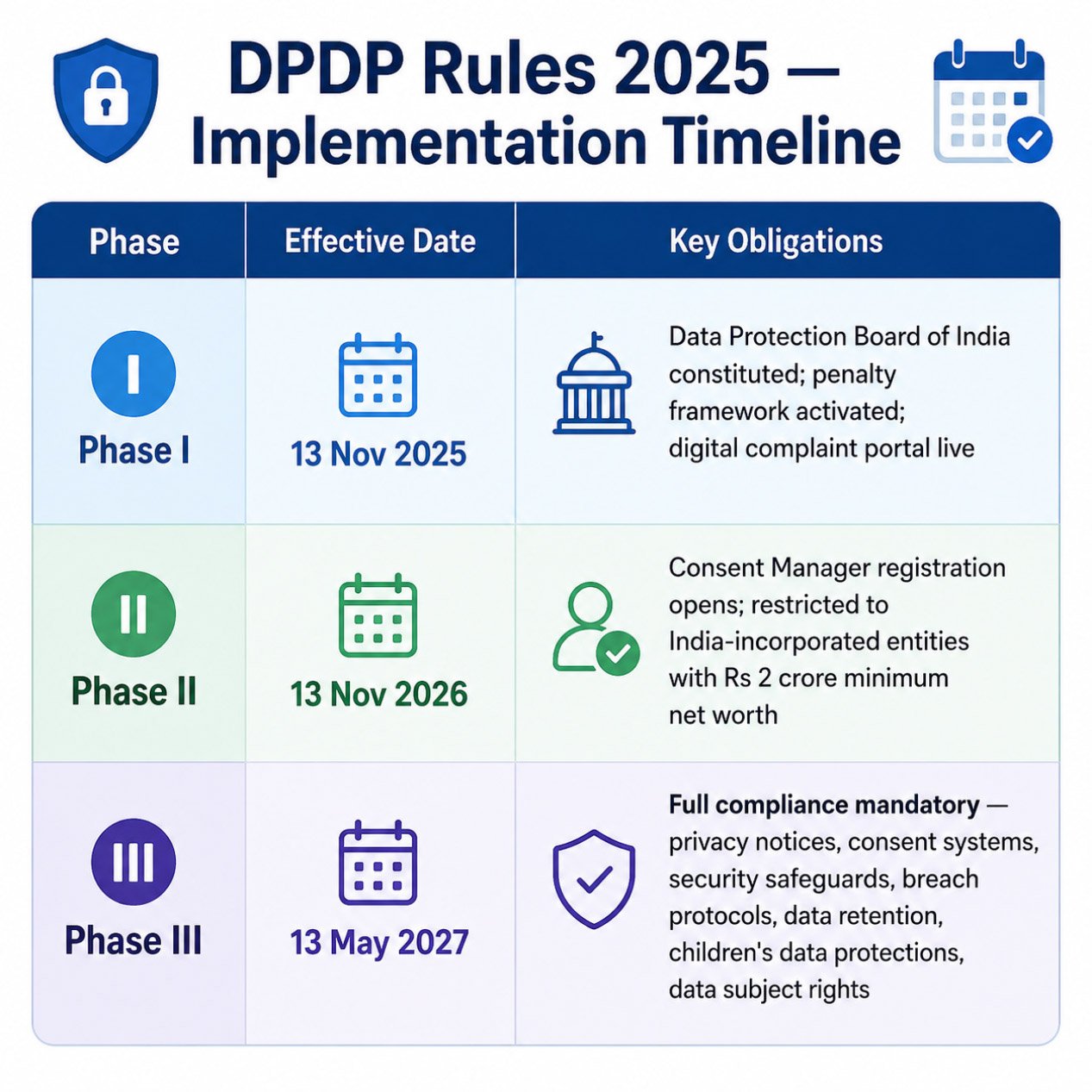 The notification of the DPDP Rules, 2025 on 14 November 2025 was the single most consequential regulatory event in India's data privacy landscape in fiscal 2025–26. The Rules — developed after consultation with 6,915 inputs from startups, MSMEs, industry bodies, civil society, and government departments across seven cities — translate the DPDP Act's broad principles into a mandatory, operational compliance framework.
The implementation follows a phased timeline. Phase I took effect immediately on 13 November 2025, establishing the Data Protection Board of India as a fully digital, independent enforcement and adjudicatory body with headquarters in the National Capital Region, allowing citizens to file and track complaints online through a dedicated portal and mobile application. Phase II, effective 13 November 2026, opens Consent Manager registration — with a critical restriction: only India-incorporated entities with a minimum net worth of Rs 2 crore qualify as registered Consent Managers, excluding foreign platforms from operating in this capacity. Phase III, effective 13 May 2027, is the full compliance deadline — the absolute deadline by which all substantive provisions must be operational.
The Rules introduce a highly regulated framework across five operational dimensions. On consent, organizations must obtain consent that is free, specific, informed, and unambiguous — expressed through a positive affirmative action, not inferred from inaction. Consent must be granular, purpose-limited, and withdrawable at any time through the same mechanism by which it was granted. On data retention, organizations may retain personal data only as long as the specified purpose is being served; once that purpose is exhausted, deletion is mandatory under Rule 8. System and processing logs must be retained for a minimum of one year.
On security, encryption is mandatory for personal data both at rest and in transit, with access controls, logging, and monitoring required as baseline safeguards. On breach notification, organizations must report breaches to the Data Protection Board of India within 72 hours of discovery. On children's data, entities serving minors must implement verifiable age verification, obtain parental consent, and are prohibited from tracking, behavioural monitoring, or targeted advertising directed at children.
Significant Data Fiduciaries — entities designated as handling large-scale or high-risk personal data — face the strictest obligations: mandatory Data Protection Impact Assessments, annual independent compliance audits, appointment of a Data Protection Officer, and implementation of AI governance mechanisms. Sectors including BFSI, telecom, e-commerce, health-tech, and major digital platforms are widely expected to be designated as SDFs.
The penalties for non-compliance are substantial — up to Rs 250 crore per violation, with cumulative caps reaching Rs 500 crore for systemic failures — among the steepest in Asia.
What Enterprises Must Do: The 18-Month Window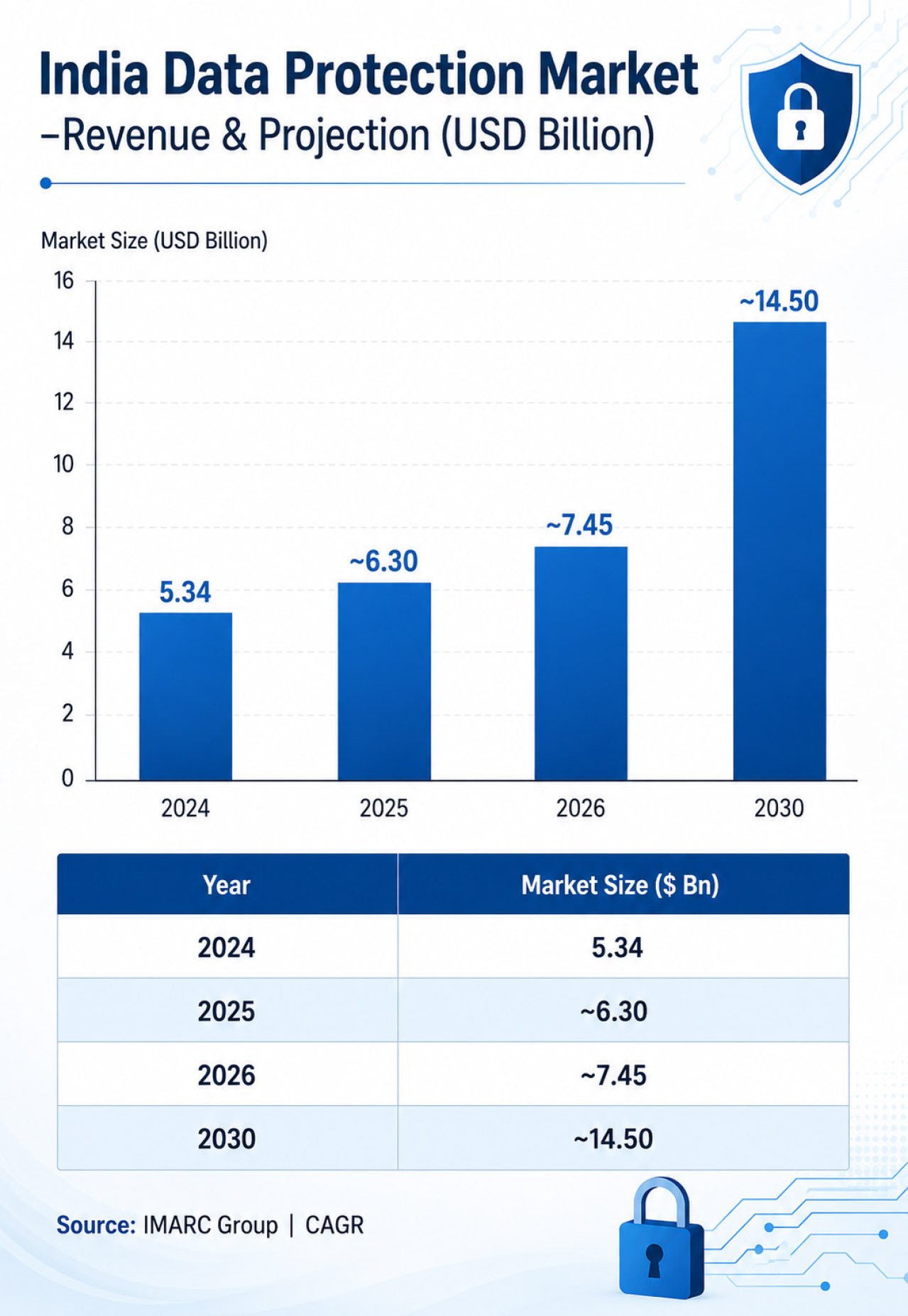 The 18-month compliance window — from November 2025 to May 2027 — is generous by appearance but demanding in practice, given the depth of organizational, technical, and legal change required. PwC India's compliance advisory team identified six priority areas for organizations that had not yet begun their DPDP readiness journey: appointing a Data Protection Officer; conducting a comprehensive data mapping and inventory exercise; updating privacy notices and consent architectures; assessing third-party vendor compliance posture; implementing breach notification protocols; and establishing data subject rights fulfillment mechanisms.
The compliance gap is significant across the market. An estimated 68 percent of companies operating in India acknowledge incomplete understanding of their DPDP Act obligations, despite having active Indian operations. The gap is most acute among small and medium enterprises, which form the backbone of India's digital economy but lack the legal and technical resources to navigate complex compliance architectures independently.
This has created a clear channel opportunity — for system integrators, managed service providers, legal technology platforms, and consultancies — to deliver DPDP readiness as a structured service offering. The Consent Manager ecosystem, restricted to India-incorporated entities under the Rules, represents a specific new category of licensed intermediary that has no precedent in India's regulatory history, creating an entirely new market segment.
Key Players: Global Platforms, Indian Specialists, and the Channel Opportunity
The Indian data privacy compliance market in fiscal 2025–26 operated across three distinct segments — global privacy technology platforms, Indian-origin compliance and legal technology firms, and the broader channel and consulting ecosystem that translates platform capabilities into enterprise outcomes.
Among global privacy technology leaders, OneTrust — named a Leader in the IDC MarketScape for Data Privacy Compliance Software in 2025 — continued to be the most widely deployed privacy management platform in India, serving organizations across consent management, data mapping, vendor risk assessment, and AI governance. The platform processed over 3 billion consent and preference transactions weekly globally in 2025 and serves 75 percent of the Fortune 100, making it the benchmark platform against which Indian enterprises measure their privacy stack.
BigID — which launched its CMP Express standalone consent management product in November 2025 — focuses on AI-driven sensitive data discovery and data security posture management, connecting consent governance to data infrastructure.
DataSafeguard is an AI-powered data privacy and synthetic fraud prevention company founded by Indian-origin entrepreneurs with operations across India and the United States. The company brings over 300 years of combined domain expertise across financial services, healthcare, retail, and technology sectors. Its platform addresses GDPR, CCPA, and DPDP compliance within a unified framework — one of the few solutions to integrate India's DPDP Act obligations alongside global privacy regulations. Core capabilities include automated PII detection, consent management, data subject rights fulfilment, and synthetic fraud prevention. For Indian enterprises managing cross-border data flows under multiple regulatory regimes simultaneously, DataSafeguard's combined privacy-and-fraud architecture offers a broader scope than single-regulation compliance tools typically provide.
Securiti AI offers an AI-powered PrivacyOps and data governance platform covering automated data discovery, consent orchestration, breach management, and third-party risk assessment — increasingly relevant for Indian enterprises managing multi-regulation environments spanning DPDP, GDPR, and CCPA simultaneously.
TrustArc, acquired by Main Capital Partners in October 2025, provides governance, risk, and compliance modules including records of processing activities and privacy impact assessments.
Among Indian-origin and India-specific players, Seqrite — Quick Heal's enterprise security brand — unveiled an AI-driven data privacy solution specifically designed for DPDP Act compliance, combining data discovery and classification across databases, cloud environments, and endpoints with automated compliance workflows.
Within the broader ecosystem, India's major IT services firms — TCS, Infosys, Wipro, HCL Technologies, and Persistent Systems — are actively building DPDP advisory and implementation practices, recognizing that enterprise compliance transformation requires not just software but organizational change management, legal integration, and technical implementation at scale. Law firms with data protection practices, including Khanna & Associates, Cyril Amarchand Mangaldas, and AZB & Partners, are seeing strong demand for DPDP gap assessments, SDF designation advisory, and cross-border data transfer guidance.
AI, Privacy, and the New Governance Frontier
The intersection of artificial intelligence and data privacy represents the most strategically complex dimension of India's compliance landscape in 2025–26. The rapid deployment of generative AI across Indian enterprises — in customer service, HR, finance, and product development — has created new categories of personal data processing that the DPDP Act's framework must now govern. By 2026, Gartner predicts that 75 percent of organizations with GenAI initiatives will shift their spending focus from structured to unstructured data security — a transition that fundamentally changes the tooling, governance, and talent requirements for privacy compliance.
Significant Data Fiduciaries designated under the DPDP Rules are explicitly required to implement AI governance mechanisms — a provision that positions the DPDP framework as one of the first national data protection laws in the world to mandate AI governance as part of the privacy compliance stack, rather than treating it as a separate regulatory domain. The implication for the market is significant: privacy compliance platforms that integrate AI governance capabilities — data lineage, model explainability, bias monitoring, and AI-specific consent management — will command premium positioning in India's enterprise market through the decade.
India in the Global Privacy League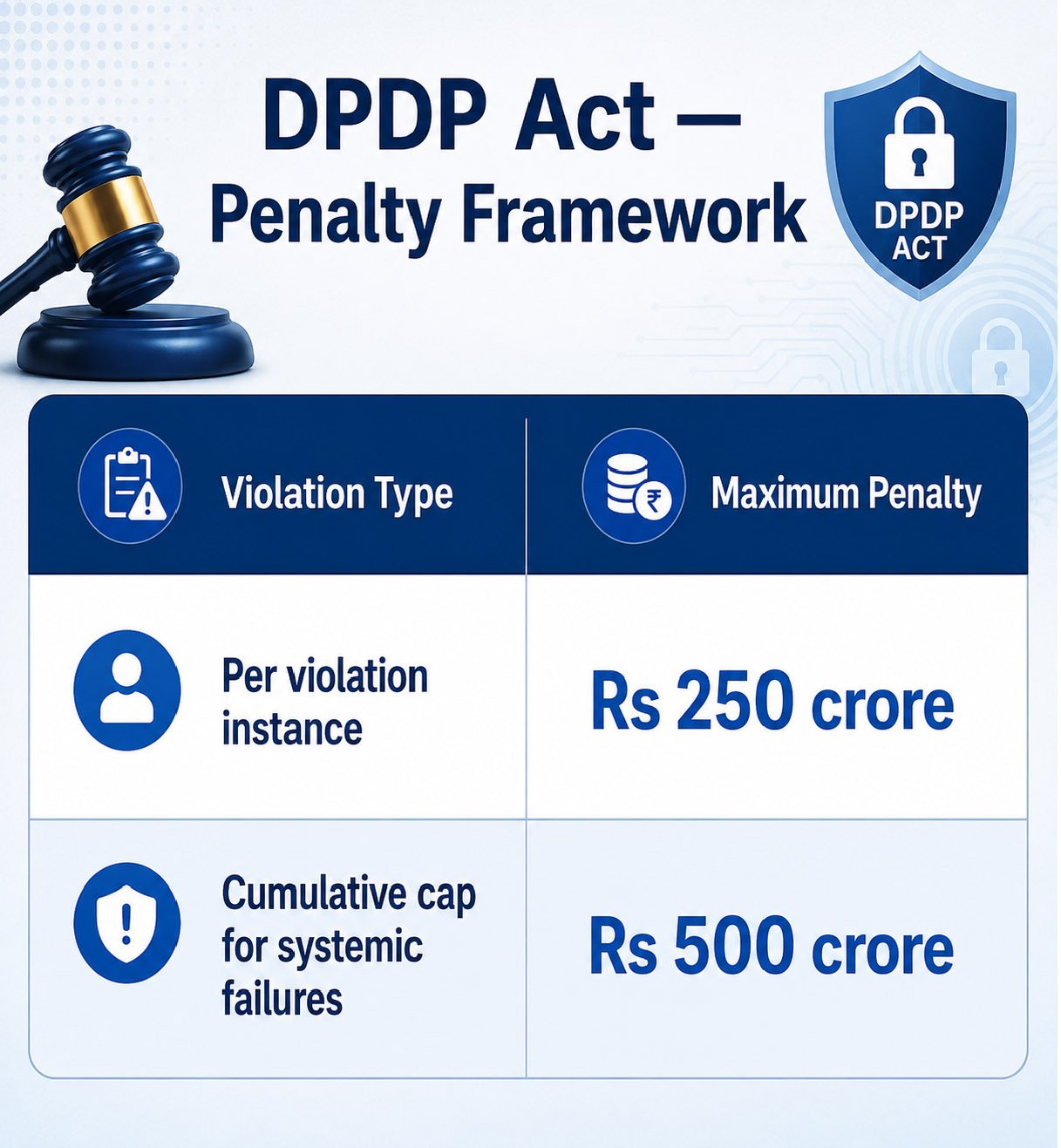 India's DPDP framework arrives at a moment when data privacy regulation is becoming a global competitive differentiator. The EU's GDPR, now seven years in force, has generated over €4.5 billion in cumulative fines and fundamentally reshaped how global enterprises handle personal data. India's framework draws extensively from GDPR principles — consent, purpose limitation, data minimisation, and accountability — while adapting them to India's digital public infrastructure context and its unique demographic scale.
For multinational enterprises operating in India, this convergence is a compliance advantage. Organisations already GDPR-compliant will find significant structural overlap with DPDP obligations, reducing the marginal cost of India compliance and accelerating readiness timelines ahead of the May 2027 deadline. For Indian enterprises expanding globally, DPDP compliance builds the privacy governance muscle that international clients, regulators, and partners increasingly require as a baseline condition of doing business. Privacy, in short, is no longer a legal checkbox — it is a market access credential.
The Road Ahead: Rs 500 Crore Stakes and a 2027 Deadline
India's data privacy market enters fiscal 2026–27 with three clear vectors of growth. The compliance services and tooling market will expand rapidly as the May 2027 deadline approaches and enterprises move from gap assessment to active implementation. The Consent Manager ecosystem — a licensed intermediary category unique to India's framework — will create a new class of registered intermediaries, likely dominated by Indian-origin platforms, processing consent transactions at population scale. And the intersection of DPDP compliance with AI governance will generate a sustained premium market for organizations that can deliver both.
For the channel ecosystem — system integrators, MSPs, resellers, and consultancies — the DPDP Act represents one of the most significant compliance-driven market opportunities since India's GST implementation. Every enterprise with Indian customers, employees, or data processing operations is a potential DPDP compliance customer. The data protection market reached $ 5.34 billion in 2024 and is headed toward $ 27.77 billion by 2033. The compliance clock is running. The market is open. The channel that moves fastest will own it.