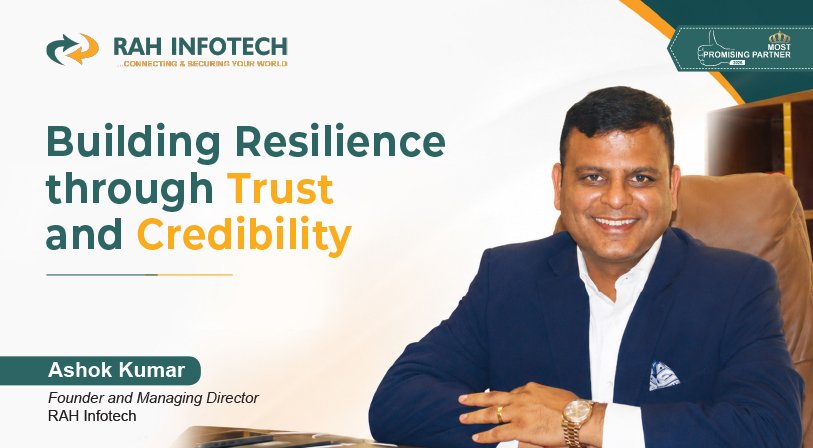
Ashok Kumar
Founder and Managing Director - RAH Infotech
The Future of India’s IT Landscape
The backdrop is genuinely difficult. A weaker rupee is lifting the cost of imported technology. Inflation is driven by oil, growth is slowing, and supply chains cannot be taken for granted. IT budgets are being scrutinised line by line. Anyone promising a straight line upward is not paying attention.
But hard conditions sharpen the buyer; they do not remove opportunity. When money is tight, capability for its own sake stops selling. A bank in Mumbai or a manufacturer in Pune asks how quickly this pays for itself, what it costs to run, and who answers the phone when it breaks. India’s longer shift continues as we move from servicing global technology to adapting and hardening it for real-world conditions. A weaker rupee makes getting deployments right the first time more valuable. That is where a value-added distributor earns its place, helping partners deploy technology confidently with cost, security, and integration realities accounted for. Customers can afford fewer mistakes; that is the part of growth we are built to protect.
Lessons from Customers’ Digital Transformation
The most useful thing I have learned is simple. Transformation rarely fails for technical reasons. It fails because the organisation underestimated what change would demand of it. We have seen capable platforms sit half-used. Sometimes data underneath was never cleaned up. Sometimes no one owned the outcome once implementation teams left. That quiet failure is far more common than the dramatic one.
So, readiness is not a starting condition; the customer builds it during the work. Success means confronting your own data, processes, and internal politics before blaming technology. Our role, alongside partners, is to have that honest conversation early. Real change is uncomfortable; pretending otherwise does the customer no favours.
Standing Out in an AI-Driven Market
I will say something slightly against the grain. Everyone is racing to attach the word “AI” to whatever they already sell. The way to stand out is not to shout louder. It is to be the firm people trust when the noise gets overwhelming. The firm that helps customers tell the genuinely useful from the merely fashionable earns an authority no campaign can buy.
In practice, that means maintaining specialist depth where AI is actually changing the conversation—threat detection, intelligent data platforms, and observability. Our partners can then speak with real relevance rather than borrowed enthusiasm. The brand we are protecting is credibility. In a crowded market, it remains the scarcest asset.
Investments & Strategic Partnerships
The investments that matter most are not the visible ones. They are in people and capability. We are building the specialist skills that let us engage on security operations, data resilience, and AI-led use cases at a level our partners cannot easily build alone. In partnerships, we prefer quality of fit over breadth of catalogue. We want technology partners with a genuine solution story to tell, not more product on the shelf for their own sake.
The challenges of 2026 are not abstract. Currency volatility squeezes margins on imported technology, while inflation and slowing growth make customers slower to commit. Crucially, customers now move faster than vendor decision cycles, and subscription models reshape working-capital dynamics. None of this is solved by a single large bet. It is handled through strong relationships on either side of us—deeper alignment with technology partners on local planning and commercial flexibility, and continued trust from resellers. In this environment, resilience is worth more than ambition.
Building Long-Term Customer Trust
You cannot decide to be a trusted advisor. The customer and the partner decide that about you over time, judging by what you do when it would be easier to do something else. A vendor is judged on the transaction; an advisor is judged on whether the partner is better off for having worked with them. Sometimes that means telling a partner a product is not right for their customer, even when selling it would be easier. Trust is built in exactly those moments.
The relationships that last rest on three things: honest conversations, fair commercial outcomes, and a real shared interest in the customer’s success. None of it is complicated; it is just hard to do consistently as pressure mounts. This business does not exist without our partners’ trust. That is the asset I think about protecting most carefully.