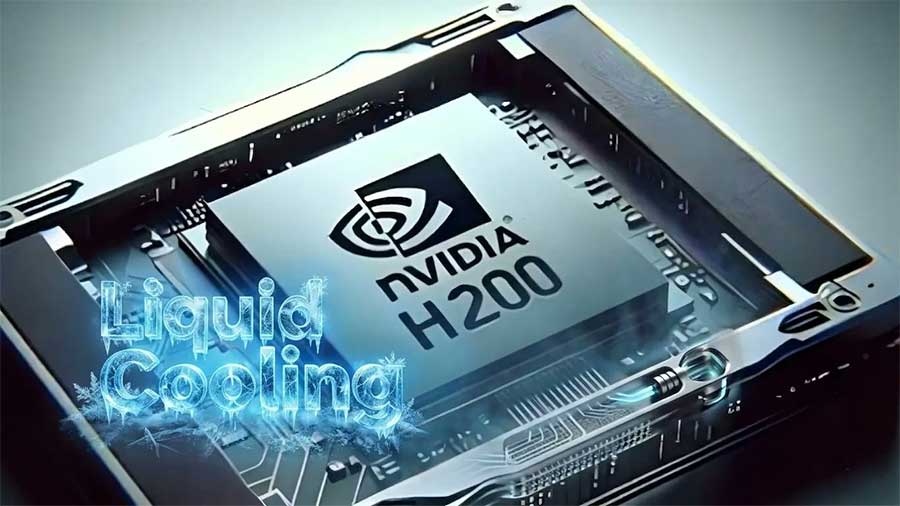
The U.S. Commerce Department has authorized about ten Chinese companies to purchase Nvidia's H200 artificial intelligence chips. However, despite the approvals, no shipments have been made to these companies, as reported by Reuters, citing unnamed sources.
Approved buyers include major tech players such as Alibaba, Tencent, ByteDance, and JD.com. Additionally, distributors like Lenovo and Foxconn are involved, allowing Chinese customers to purchase the chips indirectly. U.S. regulations limit individual purchases to a maximum of 75,000 chips per company.
Lenovo confirmed its status as an approved seller of the H200 chips in China, part of Nvidia's export license. However, Nvidia, Alibaba, Tencent, ByteDance, JD.com, and Foxconn did not provide comments on the situation when approached by Reuters.
Reports indicate that transactions have stalled as Chinese companies have hesitated to proceed, following directives from Beijing. Commerce Secretary Howard Lutnick stated in a recent Senate hearing that the Chinese government has not yet permitted these companies to buy the chips, as it seeks to prioritize investment in its domestic chip industry.
Beijing's reluctance to finalize these purchases stems from a desire to shield its local chip industry from foreign competition. Complicating matters further is the deal structure, initially set up by former President Donald Trump, which requires the U.S. to take a 25% cut of the chip sale revenues. Due to American laws against direct export fees, this arrangement necessitates routing the chips through U.S. territory before reaching China.
Nvidia's CEO, Jensen Huang, was added to a White House delegation to Beijing at Trump's invitation, even though he was not originally part of the group. Huang joined the presidential party in Alaska while Trump was on his way to meet with Chinese President Xi Jinping. In an interview with CCTV, China's state broadcaster, Huang expressed optimism that these talks could improve relations between the two nations.
Previously, when U.S. export controls were less stringent, Nvidia held a commanding 95% share of China's advanced chip market, with sales to China accounting for about 13% of the company's total revenue. This year, Huang estimated that the value of China's AI market could reach $50 billion.